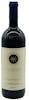
Intense, concentrated and deep ruby-colored, this wine offers elegant, complex aromas of red fruit. In the mouth it is rich and dense, yet harmonious, with sweet, balanced tannins. The wine has a long finish with a depth and structure that ensure its extraordinary longevity.
Steve Tanzer 97+ points - The 2009 Sassicaia is unusually big, rich and opulent. Layers of fruit saturate the palate as the 2009 explodes from the glass with a heady melange of dark berries, plums, menthol, licorice and new leather. This is an especially racy Sassicaia. Readers who enjoy the classicism of Sassicaia are likely to find the 2009 too rich, especially at this early stage. The wine needs at least a few years in bottle to drop some of its baby fat. Despite its huge fruit, the 2009 is also pretty closed down and not anywhere close to being ready to show off its pedigree. Sassicaia is arguably Italy’s most famous wine, so it’s always great when it lives up to its reputation. Anticipated maturity: 2019-2039.
If the entry-level wines are any indication, vintage 2010 wasn’t easy at Tenuta San Guido. Among the more affordable wines, readers should focus on vintages 2006-2009, which are more consistent. It will be interesting to see where the 2010 Sassicaia comes out next year. In the meantime, the 2009 Sassicaia is compelling.
OR Leave a Comment
2009 TENUTA SAN GUIDO SASSICAIA
"Bright full ruby. Pure, perfumed aromas of blackberry, cassis, lead pencil, violet and minerals, complicated by a superripe note of crushed raspberry. Extremely primary and pure, offering sharply defined cassis, violet and mineral flavors of great class. The perfectly integrated acidity and a vibrant floral character from the cabernet franc give the middle palate terrific lift. Though very ripe in its flavor profile, this wine conveys a rare lightness of touch that is typical of Sassicaia but rare for this vintage on the Tuscan Coast. Finishes with noble tannins and outstanding palate-staining length. For all its creamy power and charm, I really like this wine's balance and the subtle delivery of its complex flavors. I have tasted every vintage of Sassicaia on countless occasions and, other than the legendary 1985, I have no doubt that this is one of the two or three best Sassicaias at a similar stage of development. Though the 2009 won't surpass the once-in-a-lifetime 1985, it is starting out its life in bottle with almost the same perfectly balanced, opulent creamy texture and depth of that incredible wine, which I remember tasting both in Rome and in Tuscany immediately upon release. In fact, that wine was so good that even though I was still a university student (and thus on a student budget), it was the first time in my life I ever bought a full case. If I were a university student today, I'd do the same with the 2009, even though the price of Sassicaia is far higher today. There's profound potential here, but younger wine writers and consumers who weren't seriously involved in tasting back in the '80s may well be surprised by this wine's voluptuous, atypically opulent texture and thus miss its sheer greatness." Steve Tanzer 97(+) points
Wine maker notes
The legacy of Sassicaia begins in 1944, when Mario Incisa acquired a number of Cabernet Sauvignon and Franc vine cuttings and planted them on a sloping hillside of the San Guido estate, called Castiglioncello after the 11th-century castle at the vineyard's upper edge. This tiny, 3.75-acre vineyard stood alone until 1965, when a second Cabernet vineyard was planted with cuttings from the Castiglioncello parcel; the gravelly, 30-acre plot would give the wine its name: Sassicaia, "the place of many stones". This and a slightly more elevated microclimate of 20 acres, called Aianova, were planted in phases between 1965 and 1985, bringing plantings to the present extent of 90 acres in vines averaging 20 to 25 years of age.
Since the late 1960s, Sassicaia has represented a standard of production that is without compromise. The grapes are hand picked, destemmed, crushed and fermentation is set off by natural yeasts in stainless steel tanks. For the first week, pumping over of the must takes place three times daily; during the second week, this is reduced to once daily until the end of the 14-day fermentation period. The wine is pressed from the skins and undergoes full malolactic fermentation. Aging takes place in 225-litre Allier and Tronçais oak barriques, approximately 30 percent of which are new, for 18 to 22 months depending on vintage.
Technical notes
GRAPE VARIETY: 85-90% Cabernet Sauvignon, 10-15% Cabernet Franc
MAXIMUM YIELD: 30-32 hl/ha (134-144 cases/acre)
Alcohol: 12.5%
Other text
As a student in Pisa during the 1920's, the Marquis Mario Incisa della Rocchetta dreamed of creating a "noble" wine. Like most of Italian aristocracy at the time, his taste in wine ran strongly to fine Bordeaux.
After settling with his wife, Clarice, into their Tuscan estate at Tenuta San Guido on the Mediterranean Coast, he experimented with several French grape varieties and concluded, "the bouquet I was looking for” was found in the Cabernet.
A wine that had Cabernet Sauvignon as its primary component represented a radical shift from the traditional Tuscan and Piedmontese varietals of Sangiovese and Nebbiolo. No one had ever considered making a wine crafted along Bordeaux lines on Italian soil, much less in a region not yet established viticulturally. In addition to the Cabernet’s satisfactory bouquet, the Marquis’ decision to plant this grape variety at Tenuta San Guido was influenced by the Tuscan location’s similarity to Graves in Bordeaux. "Graves” means "gravel” in French, and similarly, the earth at Tenuta San Guido gave Sassicaia its name, which in the Tuscan dialect means "stony ground”.
However, accustomed to the light, local wines, consumers did not respond well to the first vintages of Sassicaia. Wines made from the more complex Cabernet Sauvignon grapes take more time to mature and develop. Subsequently, from 1948 to 1960, Sassicaia was consumed only at the estate.
Each year, a small number of cases were laid down in the cellars of Castiglioncello.
The Marquis discovered that as the years went by, however, the wine greatly improved. As is often the case with wines of great pedigree, those things originally considered defects turned into virtues over time. Soon, friends and relatives were urging him to pursue his passion and to perfect his revolutionary style of winemaking.
In 1965, he planted two more vineyards comprised of Cabernet Sauvignon and Cabernet Franc; the new "Sassicaia” vineyard was situated approximately 800 feet lower than the original Cabernet vineyard near Castiglioncello, and "Aianova” was slightly more elevated and thus exposed to the weather. Eventually, all of the wine produced on the estate came to be known by the name of Sassicaia.
The 1968 vintage of Sassicaia was the first to be offered on the open market, and it was as well received as the Premier Crus from Bordeaux. In subsequent years the cellars were moved to temperature-controlled quarters, wood fermentation vats were replaced with stainless steel ones, and French oak barriques were used for the ageing process.
The Marquis’ use of Cabernet grapes and his implementation of the barriques aging process soon spread throughout Italy. Sassicaia was the first Italian wine to successfully establish itself abroad, and is almost universally recognized as the father of the new Italian wine family or simply the Super Tuscan Pioneer. Mario Incisa della Rocchetta’s planting is now considered the birthplace of Italian Cabernet.
Food pairing
Pair with braised meats and hard cheeses.
Producer
Hailed as the standard-bearer of Italian enology, the historic Tenuta San Guido estate is known for crafting Sassicaia, the world’s first Super Tuscan and an important contribution to Italy’s evolving reputation as a fine-wine producing nation in the mid-20th century. From the ambition of Marchese Mario Incisa della Rocchetta to plant Bordeaux varieties in Tuscany in the 1940s to the arrival of acclaimed consulting oenologist Giacomo Tachis to the introduction of two additional wines to the brand, Tenuta San Guido has vaulted from success to success.